


The insurance market has decided what kind of AI it trusts with consequential decisions; the harder part is telling which vendors can actually deliver…

Blog
Insurance-Specific AI: Why it Works and Why it Scales
Most insurers have AI on the agenda, yet few have it running at scale in their operations. In a Datos Insights webinar hosted by Senior Principal Meredith Barnes-Cook, mea Platform’s Martin Henley and Max Richter explain why insurance-specific AI closes that gap, from execution layers and governance to the path from first workflow to enterprise scale.
Almost no one in (re)insurance is still asking whether to use AI. The harder question is how to make it work at scale, consistently, inside live operations. Moreover, infrastructure that holds up when regulators ask questions and underwriters depend on it every day matters now more than ever as more organizations are turning to AI for efficiency gains. These thoughts together framed a Datos Insights webinar on insurance-specific AI, hosted by Meredith Barnes-Cook, Senior Principal at Datos Insights.
Meredith was joined by mea Platform Group CEO Martin Henley, former Group CIO of XL Group after many years at AXA, and EMEA CEO Max Richter, who spent more than 20 years running parts of Accenture’s global insurance business. Together they covered where insurance-specific AI fits in an enterprise architecture, how it moves from pilot to production and why trust and governance decide whether it scales.
Key Operational Takeaways: Insurance-Specific AI
- Insurance-specific AI sits beside general-purpose AI and core systems as an execution layer: the core systems organize the work, and the execution layer runs it.
- 75% of insurers trust insurance-specific or governed-hybrid AI most, while only 6% trust a general-purpose model alone, according to ISG research commissioned by mea Platform.
- Scale comes from proving one bounded workflow on real volume first; one global carrier working with mea Platform grew from 40,000 to 360,000 clearance transactions a year that way.
- Trust is earned one transaction at a time, because a single visible error can outweigh thousands of correct extractions.
- Regulators expect insurers to show why an AI-supported outcome happened, which requires a decision trace built into the workflow.
Why Is Execution the Gap in Insurance AI Adoption?
Martin opened with some key points from The State of Insurance Operations, research published by ISG (Information Services Group) and commissioned by mea Platform. It found that 96% of insurers have an AI-led operating model redesign underway, planned or under evaluation. Yet only 13% describe their operating posture as advanced today, against 52% who intend to get there.
“The ambition is widespread,” Martin said, “but the controlled execution of this technology to really drive ROI is still a challenge.”
He pointed out that the gap has little to do with the technology itself; it is already capable. What holds organizations back is putting it to work inside live operations with the controls, integration and measurable return that let it scale. Many organizations have been quickly faced with the reality of the AI-decisions they make now having a long-lasting impact in how their organization progresses, causing many to either be flat footed as the analyze options or progress slowly so they have the option to reset.
Where Does Insurance-Specific AI Sit Alongside General-Purpose AI?
Every insurer mea works with already runs general-purpose AI next to its core systems, and Martin was clear that it belongs there. mea’s thesis is that these generative AI tools are exceptionally helpful in their own rite, and they are becoming apart of how we work every day. mea sits beside both as an execution layer: the core systems organize the work, and mea runs it and writes back. So the first conversation is usually about the operating model: where should repeatable work stop reaching an underwriter at all?
Meredith pressed the obvious CIO question: if frontier labs now offer capable models and agent frameworks, what does mea add? Max agreed those models are powerful. “But what they do not provide by themselves is a production insurance operating capability.”
mea supplies two key things. The first is insurance intelligence: mea OraSM℠, built over five years on mea’s proprietary domain-specific language model℠ (dsLM) and insurance knowledge graph℠, which understands that the same word or value can mean different things by document, line and context. The second is the production operating layer: core system integration, agent lifecycle management, evaluation, a control layer, regression testing and governance.
Max also made the case for protecting institutional intelligence. A client’s rules, mappings and corrections stay in its own environment, so models can be swapped without losing those assets or passing the client’s expert feedback to anyone else. He read ISG’s 75% finding as “a preference for architecture that is accountable,” rather than a verdict against general models.
What Does Insurance-Specific AI do on a Real Transaction?
Arguably, the highlight of the conversation was Martin’s tangible example. He explained one of mea’s live use-cases with a mid-term change on a multinational commercial program: a broker emails a revised schedule adding one location, removing another and changing insured values. mea identifies the transaction, links the thread and attachments to the existing case, compares every document and builds a structured record mapped to the insurer’s own fields, with the source page preserved for each value. In-authority updates pass straight into the policy administration system; missing evidence, conflicting documents or out-of-authority changes go to the right person with the evidence attached.
How Does Insurance AI Move from Pilot to Production?
The clearest proof of scale came from an anonymized global commercial and specialty carrier. It started with roughly 40,000 new business clearance transactions a year, with mea classifying submissions, validating around 67 agreed fields and feeding the carrier’s legacy environment. Over successive contract periods committed volume grew to 300,000; live demand then outpaced the forecast, and the carrier added 50,000 more. That is 360,000 transactions, almost nine times the starting commitment.
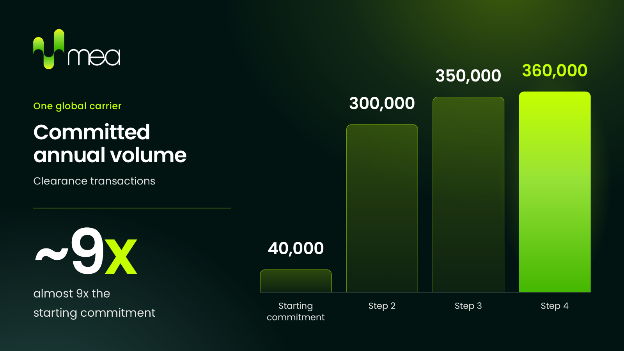
“The client didn’t commit day one to enterprise scale,” Martin said. It proved accuracy on real work first, grew volume as the service became business as usual and is now exploring adjacent workflows such as renewals. Moreover, Martin emphasized that 90%+ of clients choose to expand their use of mea after their initial deployment. This was the driving thesis behind the setup of mea Operations, mea’s modular suite of AI-powered products that automates the repeatable work across underwriting, claims, finance and broking. Due to mea being modular, clients can start with a single workflow, such as submission intake or underwriting, then plug in more of mea Operations as they expand AI across the business.
Additionally, Max described clients expanding through more volume, more steps around the same transaction and adjacent functions that reuse the same controls. One global reinsurer saw production use of its treaty statements of account workflow rise fivefold in a single month. He was candid, though, that “modular does not mean effortless or configuration only.”
Martin capped off this part of the discussion with his “playbook”: start with a bounded workflow that has real volume, set a baseline and a clear decision owner, test under peak demand, then deliberately redeploy and measure the capacity that frees up.
Why Does Trust Decide Whether Insurance AI Scales?
ISG found that 63% of insurers see integrating AI across functions as a primary barrier. Max noted that once the groundwork is done, a bounded workflow can typically reach production within a few weeks. The harder part is trust.
“An underwriter on the front line doesn’t experience an average,” he said. “They experience every single transaction.” One wrong limit can undo confidence built over thousands of correct extractions, and users who stop trusting the system go back to checking everything. Change management needs named business owners, training on what the system will and will not do, access to source evidence and root cause analysis for every material correction. Human fallback belongs in the governed exception path, never as a parallel manual process that can quietly become the default.
That trust depends on governance living inside the workflow. Without it, the cost lands on the person downstream: they re-key and re-check what arrived because they cannot be sure it is complete and cannot always verify a figure context. This results in the speed gained from the first answer getting spent on the rework behind it. A single instance can take a real chunk out of someone’s day.
mea’s thesis is that governance belongs in the layer around the model. Every value carries its lineage back to the source document, page and location, and every decision, correction and action is logged, so the person downstream can act on the output instead of auditing it.
How Should AI Governance Work in Insurance Operations?
Martin walked through a layered regulatory landscape, from the EU AI Act to the NAIC Model Bulletin and New York’s Circular Letter No. 7. The scopes differ, but the supervisory questions converge: where AI is used, who is accountable and what evidence supports the result. For every case, mea retains the input evidence, source lineage, rules applied, model version, actions taken and each human approval or override. “At the end of all of that, the insurer remains accountable,” Martin said.
Max added that “an audit trail is not the same as asking a model to explain itself.” mea creates the decision trace at the workflow layer, inside the client’s own single-tenant instance, so authorized users can inspect or export it without waiting on a vendor support ticket.
Audience Q&A: Insurance-Specific AI
How does the platform learn from underwriting exceptions without bias from previous decisions? Through a controlled feedback loop. Clients can adjust both model outputs and the rules behind them, from validation rules to underwriting appetite, and every change is tested with the client before it is deployed selectively into production. As Max put it, the production controls the industry has relied on for decades “need to apply within the AI world and are even more important now.”
Where does mea sit relative to core systems, and where does the human come back in? On top of the core systems, as an execution layer with three parts: insurance intelligence, agentic execution and enterprise control over rules, thresholds and approvals. Data arrives by API, mailbox, SFTP or upload and leaves through structured APIs or files. People come in at the points the client sets by workflow, risk and authority, and every exception arrives with its reason attached.
Why choose standalone insurance-specific AI over AI built into a policy administration platform? Because the repeatable work is the work to buy. Drawing on 25 years as an insurance CIO, Martin separated work that creates competitive advantage from work that is business critical but repeated for every policy or claim; buying the second frees scarce internal talent and time for the first, with faster returns and far lower maintenance costs. Meredith summed it up perfectly: “We’re now in a world of buy so you can build.”
The Operational Insight: Why Insurance-Specific AI Works and Scales
Three things hold true regardless of line or market:
- The ambition is no longer the constraint; controlled execution is.
- Scale is earned one bounded, measured workflow at a time.
- Trust and governance have to live inside the workflow, owned by the insurer.
As Max put it in closing: “The technical capability is there. What matters now is the ambition, the strategy and turn that strategy into rapid execution.”
At mea, our proprietary agentic system was built from the ground up on (re)insurance operations and has processed more than $450 billion in gross written premium for 30+ clients across 20+ countries. Bring us a workflow, and we will baseline and test it with you. If you deploy, you can expand quickly across multiple lines or embed mea deeper into your operations with more of our products. That modularity, agility and ability to show results immediately is why insurance-specific AI works, and why it scales.
AI agents own the repeatable. People own the consequential.
Insurance-Specific AI: Why It Works and Why It Scales
Full webinar transcript
Editing note: This transcript has been cleaned for readability and corrected for clear company, product, speaker-title, and proper-name transcription errors. It has not been checked word-for-word against the webinar audio; uncertain wording is otherwise preserved.
Meredith Barnes-Cook (Senior Principal, Datos Insights)
Welcome, everyone, and thank you for joining us today. I’m Meredith Barnes-Cook, a senior principal at Datos Insights, focused on property and casualty insurance, and I’m really looking forward to this conversation. Here’s where I wanna start. The question I hear most often right now from insurance organizations is not, should we be using AI? Because of course that ship has sailed. The question is, how do we make it actually work at scale consistently in a way that holds up when regulators ask questions and when our underwriters are depending on it every day? That shift from, can we pilot this, to can we scale this, is what we’re gonna dig into today. And it’s a particularly important question for the technology leaders in this room because you are the ones who own the architecture decisions that determine whether a pilot ever becomes something the whole organization can rely on. Today, I’m joined by two leaders from mea, Martin Henley, the group CEO of mea Platform, and Max Richter, mea’s EMEA CEO and Global Growth Leader. Gentlemen, really thrilled to have you here. And before we get started, Martin and Max, could you just take a moment to briefly introduce yourselves and share a bit about mea?
Martin Henley (Group CEO, mea Platform)
Uh, sure. Thanks, Meredith. Martin Henley. Um, great to be here. Thank you for your time in conducting this discussion. Uh, my background is actually all in insurance companies. So I was group CIO at XL Group, London-based, but spent a lot of those five years in the US. And before that, many years at AXA. Incorporated mea just over five years ago now, and we’re insurance-specific AI focused on the global industry
Meredith Barnes-Cook (Senior Principal, Datos Insights)
Max
Max Richter (EMEA CEO, mea Platform)
And this is, um, Max Richter here based in London. Uh, all my career within insurance, close to 30 years. Worked across a variety of technology and consulting organizations and over 20 years within Accenture running different parts of its, um, global insurance business. And I’ve traditionally operated at the intersection of technology, operations, underwriting, and claims.
Meredith Barnes-Cook (Senior Principal, Datos Insights)
Fantastic. Thank you, and thank you both for joining us and to our entire audience. So as the conversation gets started, audience, if you have questions, you should see a, a Q&A button, a section that you can enter into. Please post your questions there, and we’ll be keeping an eye out for them, um, to find a, a good opportunity to bring those, uh, to the forefront So let’s start with the reality on the ground. Most of the organizations that mea’s talking to already have AI in their environment, of course. And now, more recently, they’ve got Copilot, they may be running OpenAI or other tools. Plus, of course, they’ve got their myriad of core systems. So when mea walks in the door, you’re not walking into a blank slate. How do you frame that conversation?
Martin Henley (Group CEO, mea Platform)
Yeah, thanks, Meredith. Uh, I mean, we, we agree with the premise. That’s the reality today, that every client has a general purpose AI that they’re using, and, and that’s where we see it belongs, as general purpose. mea sits beside it, beside it and the core systems as an execution layer. So they would organize the work, but mea would run, would run it and write back to it. So the conversation when we, when we arrive, often with clients at the moment, typically starts with operating model, and particularly where should the repeatable work stop reaching an underwriter at all. Uh, we actually recently commissioned a survey of 150 insurance decision-makers across North America, Europe, and Asia, um, literally just last month. And it found that 96% of the industry have AI-led redesign underway, planned or under evaluation. It’s not a huge surprise that only 13% that will acknowledge that they’re– they have an advanced operating posture today, compared to 52% intended it two years ago. Um, so the ambition is widespread, but as we’re seeing, the kind of controlled execution of this technology to really drive ROI is, is still a challenge.
Meredith Barnes-Cook (Senior Principal, Datos Insights)
Yeah, and it’s consistent with what we’re hearing, how get, how to get to that scale. So clearly you’ve confirmed, I think hopefully everyone acknowledges it’s, it’s an and, not an or conversation. But a CIO may reasonably say, “Hey, you know, OpenAI, Anthropic, they now offer capable models and agent frameworks. If my team can connect with them, use the tools, orchestrate all these steps. So what does mea provide that I do not already get from that tech stack, and why should I care?”
Max Richter (EMEA CEO, mea Platform)
Yeah. So I agree. So OpenAI and Anthropic provides increasingly powerful models and agent frameworks, right? And we all use those in our personal lives, and we use them for general productivity. And I use these models a lot for personal productivity. They can reason over context, they can call tools, they can execute a design sequence. But what they do not provide by themselves is a production insurance operating capability, right? So the client still has to build, validate, integrate, and run that capability around the model. So mea supplies two things. So the first is the insurance intelligence layer. mea Ora℠, um, is the, um, uh, language model, the insurance-specific language model that we’ve built over the last five years that’s plugged into the mea platform alongside approved external models, right? And alongside that, we’ve got a knowledge graph, which includes tens of thousands of data fields, insurance ontology with aliases, with mappings, with classification capabilities for documents and transactions. We can do cross-document reconciliation, uh, map back to source evidence, insurance-specific business rules, validations, and exceptions handling, right? So all of that sits within insurance intelligence layer, which lets the platform understand that the same words or value can mean different things by document, line, and context. Okay? And then as a second thing, we supply the production operating layer, which is effectively the workflow orchestration, the integration into the various core systems, the prompt and the agent lifecycle management And then some of the supplementary capabilities like feedback capture, evaluation sets, regression testing, audits, and operational service management. And that all needs to be, um, let’s say, embedded within a production insurance platform that allows things like corrections and changes to be routed through the right controls, tested outside production, released under client-approved controls. And CIOs really care about having this kind of capability because it avoids them having to build and operate that specialist insurance AI product layer and the supporting controls, right? And it moves a proven workflow into production faster. It preserves the model optionality and, really importantly, keeps the client’s rules, mappings, evaluations, and the learning. So the combined learning that the client puts into that model allows them to keep that, right? Um, and they retain that enterprise governance and accountability over time. So they can swap models around, but that combined accumulated insurance intelligence stays within the production system
Meredith Barnes-Cook (Senior Principal, Datos Insights)
Martin, can you offer us, um, a really specific but understandably anonymized example of where that insurance specificity changes the outcome for some type of a servicing and endorsement transaction, and walk us through what actually happens to make it help it make it real from our audience?
Martin Henley (Group CEO, mea Platform)
Sure. Um, so for example, take a multinational commercial program. Maybe it’s a, a renewal or midterm. The broker emails a revised schedule and asks for one location to be added, one location to be removed, uh, change of insured values, and then issue the related endorsement or certificate. Uh, the file may be– may include the expiring program, might include revised master information, local policy documents, all in different formats. So a fairly common, um, piece to happen, but o-obviously, there’s a bit of complexity in there. So mea would identify that transaction first from the thousands, tens of thousands coming in. It would link the email thread and attachments to the existing case. It would classify each document because that it would have multiple documents typically, and compares the expiring and the revised information. It, it, mea would then create a structured record of kind of all the steps of that change, map it to the insurer’s terminology and system fields from, from an integration perspective, and also preserve the source page and location for each value So the platform would then apply the insurer’s specific servicing rules. That could be effective dates, the level of evidence required, authority limits, referral triggers. Uh, if there’s a need for underwriting or rating review, which obviously some require, some don’t, uh, and that will be down to the insurer’s specific rules. Um, it will complete the, the kind of in-authority updates. It will complete them automatically and pass them through the approved path, integration path into the policy admin system or, or other systems. The missing evidence, the conflicting documents, I don’t know, a backdated request or an out of authority change, those things would all go to the right person with the issue and the evidence identified. So the result here isn’t just summarizing some documents, but it’s actually taking a full servicing transaction in a controlled way with a record change, with evidence, with outcomes, with exception status, and with human intervention where it’s required and, and managing that completely through the process. And what that allows is that the operations staff, who are expert as we know, can focus on the actual exceptions rather than the repeated reading, comparison, and rekeying and follow-up that, that they need to do today.
Meredith Barnes-Cook (Senior Principal, Datos Insights)
So Max, so I want to be– I think we all want to be fair, right, to the general purpose platforms out there. Um, and we’re not saying that one is better than the either ac– than the other across the board. So how does mea fit into a mature client’s enterprise architecture, and why do you think seventy-five percent trust insurance-specific AI or a governed hybrid most, while only six percent will have chosen a general purpose model alone?
Max Richter (EMEA CEO, mea Platform)
So Meredith, the model is one component of the architecture, right? Um, so there’s different layers here. Now, the client would typically, um, control and keep control of, uh, the clouds, their, um, their infrastructure environment, identity and access management, data platform, model gateways, security integration standards, um, monitoring and release governance. So all of that is a client-specific layer that will not, um, um, be outsourced, let’s say. Um, mea sits above that foundational, uh, uh, architecture layer and below the business systems, right? The core systems, the powers, the claim systems, et cetera, as the insurance intelligence and production workflow layer, right? Using approved models, whether that’s mea Ora℠, whether that’s the client’s preferred model, Claude, GPT, whatever it is, right, as appropriate. Now, that seventy-five percent result I think is best read as a preference for architecture that is accountable, not about against general models. And trust rises when the output is tied to source evidence, insurance definitions, and client rules, and when exceptions have a defined route, and when changes are evaluated versions and approved before release. And importantly, a governed hybrid, an example which is mea, also protects institutional intelligence. And I think this is really crucial for, um- Carriers and brokers and MGAs and organizations in the insurance industry that want to, uh, protect the competitive advantage and build on it, right? The client’s prompts, the rules, the mappings, the rack contents, the evaluation sets, the corrections, the workflow history, all of that needs to stay in its dedicated environment. Models can change without losing those assets or passing the benefit of the client’s expert feedback to a general model or to another customer, right? And that is why CIOs care. They want to retain enterprise standards. They want to retain vendor choice. They want to avoid the need to build everything and permanently operate a specialty, um, ontology and annotation and evaluation and release and workflow capability and tooling themselves, and have a resulting service that is easier to integrate and challenge and defend
Meredith Barnes-Cook (Senior Principal, Datos Insights)
Super. So let’s double click a bit more on the, the journey from pilot to enterprise, kind of the, the challenge that the industry is continuing to face. And we’ll talk a bit more about some of your clients. Uh, I always say that when I’m working with, uh, vendors is the most powerful thing that you can share is what your clients are saying about you when you’re not in the room, so to speak. Because those reference conversations that influence that buying decision occur, um, when you’re not in the room, and those reference con- conversations really can be incredibly impactful. So what are you hearing, and why do organizations come to you? Where do they typically start, and what changes once they’re live?
Martin Henley (Group CEO, mea Platform)
Sure. Thanks, Meredith. Great question. Um, so maybe a useful anonymized example is a, one of our clients, a global commercial and specialty carrier, um, who began roughly with about 40,000 new business clearance transactions in production, where we– mea was classifying the incoming submissions, extracting and validating about 67, I think it was then, agreed fields, and then sent the struct– we were sending the structured outputs into the carrier’s existing legacy environment across many– multiple lines of business. Then what’s happened is through successive contract periods, the committed volume for that client has gone from 40,000 per annum transactions up to– went up to 300,000 transactions. And then we had the scenario where the live demand was exceeding that forecast. So the carrier then added another 50,000 during that contract year. And we’re, and we’re now at a point– Well, previously, a few months ago, got to a point we’re at 360,000 transactions. So kind of almost nine times where the, where the client started in terms of commitment. And what’s really interesting about this case, and I, I do think it’s a very good example where the client didn’t commit day one to enterprise scale, do everything. It first proved accuracy, operational reliability, but on real work. It integrated the outputs into systems that their users were already used to using, and then increased the volume as the service progressively became part of business as usual operations Um, the expansion in consumption is evidence of a- a- adoption and also confidence in the, in, in mea, in the tool. Um, and that’s the proof point here more than a particular cost reduction or, or underwriting outcome. Um, they’re actually now exploring further expansion with us, and we’re discussing at the moment looking at adjacent workflows such as renewals, where we would– mea would identify the request, re- compare new information with the current policy, flag material changes, prepare structured downstream updates, and route the, the genuine exceptions again to people. So that’s, that’s how we would think about these steps as the full end-to-end transaction, insurance transaction. Um, and certainly when clients ask this, us about this topic of how do we go from pilot to something real, is that thinking about a workflow and thinking about starting on something that’s real, it’s very important it’s real and in production, but doesn’t necessarily cover everything, is a nice way to test the technology, test the change management in your organization, and then you can step up from there as time goes on.
Meredith Barnes-Cook (Senior Principal, Datos Insights)
Yeah, that really aligns with we– you hear the expression the crawl, walk, run. Um, and I think it’s more compelling, um, and opportunistic than ever now to get as early volume as quickly as possible to learn and then grow. And I love that, the observation made about the word genuine exceptions, because there’s, there’s a big mindset shift obviously an organization needs to go through in terms of what you may have expected people to have to manually get engaged on and decide and act upon today versus what that looks like in the future. Exactly.
Martin Henley (Group CEO, mea Platform)
Exactly. And I think- So-… setting that level, sorry, setting that level is so, so important, and making sure that you’re working with a tool that allows you to flex that level over time-
Meredith Barnes-Cook (Senior Principal, Datos Insights)
Mm…
Martin Henley (Group CEO, mea Platform)
as frankly your, your people become more comfortable with what are the right ones that we actually need to be looking at.
Meredith Barnes-Cook (Senior Principal, Datos Insights)
Yeah. A- absolutely. Trust is something more than ever that has to be earned with this technology for organizations to really get that maximum value, and honestly for employees to get that maximum relief, um, to, you know, be able to release the things they’ve just bo- been so autonomically customized to doing. And so Max, let’s really bring our technology leaders in the audience specifically into this conversation. What does it take to integrate into this environment h- and how long before results? And what does the business need to do so users trust the output rather than reverting to their manual checking after the first visible error emerges?
Max Richter (EMEA CEO, mea Platform)
So Meredith, our research found that 63% of insurance industry participants see integration across functions as a primary barrier, while 47% place integration with existing or core technology among the top three barriers. I think this reflects both organizational complexity with workflows that span across more than one function. For example, underwriting and claims, underwriting and finance, et cetera, and the inherent complexity around that within the industry. And on the integration side, we’ve been doing integration for, um, decades and decades, but it continues to be a challenge for many reasons. We don’t understand some of these, um, old core systems. They don’t expose APIs, et cetera. So therefore, you need, um, agentic capabilities that have comprehensive and flexible integration capabilities to be able to deal with this insurance real world, real world complexity. So on the technical side, you know, you need some of the hygiene stuff like agreeing the source channels, the ta- target data model, identifies the security controls, uh, the messaging interfaces, the callbacks, et cetera, et cetera, right? Um, and once that is in place, and once people are available to do the integration, it actually works pretty well. And a bounded workflow can typically reach production within a few weeks, right? Once the representative transactions, the output schema, and all the pre-work is done, right? So it doesn’t have to be a huge barrier, but it can be in practice, um, a lot of the time. On the business side, I think what you mentioned before, it’s all about trust, right? Because when we talk about AI, we like to create metrics, right? Metrics around accuracy and how accurate the AI is in, uh, processing business, processing transactions, extracting data items, et cetera. And we do monitor that for all of our clients. But I think what we need to be cognizant, both us as, as mea and our clients as well, is that users on the front line, an underwriter on the front line doesn’t experience an average, right? They experience every single transaction. So they remember wrong limits, a deductible, a wrong insurer name, or a visible critical field error, and that can outweigh hundreds and thousands of correct transactions or extractions, right? And then if they stop trusting the technology, then they’re gonna go to their, uh, convenient fallback, which is to do things with humans And if the QA sample becomes too small, feedback stops or issues are not explained, emerging problems become invisible, and users, as I said before, revert to checking everything and asking for human support. So change management is a critical capability, and it needs named business owners and champions. It needs training on what the system will and will not do. It needs access source evidence, clear escalation, and rapid support. And each material correction should lead to a root cause analysis, a controlled fix, regression testing, and release communication. So all those hygiene capabilities around change management need to apply to the AI world as well. And human fallback is appropriate while the workflow stabilizes, but it should remain the governed exception path rather than a parallel manual process that quietly becomes the default. Th-
Meredith Barnes-Cook (Senior Principal, Datos Insights)
that’s so, that’s so true, right? It’s that, just that stealth slippage. It’s another… Uh, it’s like operational drift, um, that it just, it just starts happening before you, you… And you can’t see it until it’s happened in significant quantities. And I really appreciated your observation about the, the organizational context of, you know, in change management, but it, that it’s not even when you think about the life cycle of a, of a quote or a policy. It, in larger organizations particularly, that can span at least two, if not more, different administrative operations. Um, the people doing the policy servicing may be doing the submissions piece and may be generating the actual base rating and the quoting and all that type of thing are different, in a different group than the actual underwriters. And so just kinda thinking about there’s some, there’s some siloing, some fracturing today that has to be brought together because the, the, the future state, the change manage- the new way of getting work done, uh, you know, it’s an opportunity for all, but it’s, it’s a change for all. And so all- Absolutely that have a hand in there have to be involved in this.
Max Richter (EMEA CEO, mea Platform)
And to build on what you just said, Meredith, right. I think, you know, we’ve, we’ve got an operating model within the insurance industry which has evolved over many decades that is pre- AI, right? And we’ve created those artificial barriers. So you take one end-to- end business process, you’ve got these artificial barriers between what the underwriters do, the underwriting assistants do, what underwriting operations does, what an offshore BPO support partner may do, et cetera, et cetera. And we’ve got all these handoffs, right, across the end-to-end process. In a post- AI world, we need to rethink that entire end-to-end business process and the
Meredith Barnes-Cook (Senior Principal, Datos Insights)
operating model that currently supports it. Yeah. A- and more so than ever now, um, it, it has to happen. I- we’ve been, as an industry for the four decades plus I’ve been in it, we’ve been kinda consistently disappointed when we’ve made major technology shifts, and from my observation, part is because we didn’t go deep enough before we started. We didn’t really see the true operational organizational potential and impact, um, to make that happen. And so we kind of let the organizational contracts, constructs be kind of sacrosanct unintentionally, um, and kind of wedged a new modern solution in, and kind of wound up staying closer to the way we used to do things versus what you’re talking about, really reimagining how we can do things in the future So let’s talk a bit about– I’m gonna have both of you weigh in on this one, on modular expansion. And you’ve, you know, you’ve talked about organizations starting at one place and then expanding from there. What are you seeing that’s looking like in practice? If you could offer some examples, moving from, you know, one production workflow to a broader use. Um, and then, um, you know, kind of tying back to, you know, what you’re seeing in terms of that, um, operating posture today of, you know, the thirteen percent, um, compared with the fifty- two intended within the next two years. What do you think is separating the organizations that scale from those that keep launching these isolated pilots?
Max Richter (EMEA CEO, mea Platform)
So, Meredith, these clients expand in three directions. Um, more volume through a proven workflow, as Martin alluded to earlier. More steps around the same transaction. So for example, start with clearance and then going to, um, rating and quote, et cetera, or an adjac- adjacent function that can reuse the platform and the controls. And the strongest evidence is production adoption rather than another pilot, right? Modular does not mean effortless or configuration only. Each new workflow still needs its own data fields, mappings, rules, exception paths, workflow paths, uh, workflow execution paths, accuracy baselines, UAT, all of that, right? Even when the entire, um, production operating model is reused. So some examples. Uh, a global reinsurer started with, uh, P&C treaty statements of accounts. Uh, production use increased fivefold from June to July, and the relationship is now expanding into property schedules of values and life and health processing. Another European commercial insurer began with a live property and engineering ingestion workflow in Germany, and its broader program now covers underwriting intake, claims, first notification of loss, correspondence, and a group-wide ingestion management rollout in progress
Meredith Barnes-Cook (Senior Principal, Datos Insights)
Martin, what are your thoughts?
Martin Henley (Group CEO, mea Platform)
Um, so what we’ve seen that works is, and it’s quite a specific set of actions actually. Start with a bounded workflow that’s got real volume, that’s important to your business. Establish the baseline and have a clear decision maker, decision owner before expanding beyond it, beyond it. Configure the, of course, the insurer’s own rules, authority limits, exception paths, and then test that under a peak demand. So looking at missing data, looking at failure conditions. Once, once you’ve done that and got something working, then also that’s not the end. Also redeploy the capacity, so the people effort very deliberately, and measure that people effort that now is not spent running that workflow, but is now doing something that’s maybe understanding risks better or wherever you point that expert people effort. And, and understand whether that improves decisions, conversion quality, rework, cost to serve, whichever you’re looking at. And, and, and if you understand that for a specific step, for want of a better word, and you understand it all the way through, so you’ve done the work on the, on the technology, on the people change, and you understand the impact of that, then that allows you– that gives you something you can then, you can then scale from
Meredith Barnes-Cook (Senior Principal, Datos Insights)
Yeah, that makes so much sense. And yeah, when I was just, you know, kind of thinking about that, that capacity piece, um, this is– and the baseline is for we did some research and found that, you know, s- the carriers we spoke with, majority said they belo- believed that the AI they were, um, they’d implemented was having an impact. But in hindsight, they hadn’t grabbed the baseline, um, so they really couldn’t quantify how much. Um, so that, that baseline is more critical than ever to really understand the, the return you’re getting on the investment, um, without question. Um, and then I think, you know, kind of again that, that capacity that gets released starts requiring carriers to think about, um, maybe you don’t need– maybe now you have more capacity for growth without hiring. Um, but you may also have some talent you wanna think about redeploying into other parts of your organization, which does warrant carriers kind of rethinking what their career lattice looks like or what I call a career jungle gym, to really think about people that really can navigate into very different parts of the organization from underwriting into claims, for example, um, as opposed to, you know, losing some, some really great people who are really, you know, great cultural fit, um, and great insurance experts- Yeah that could learn another functional area. And we did get a question- This is
Max Richter (EMEA CEO, mea Platform)
one of the most, uh, uh, Meredith, if I can just build on that very briefly. Yeah. This is one of the most exciting aspects of the work that we do day, day in, day out from a, from personal perspective, right? So there’s been around the general crisis, doom narrative, AI is going to take all jobs. What are we seeing in practice, right? The biggest use case around AI on a global level is coding. This is where most of the revenues are coming for the big labs. And what we see in terms of the number of advertised coding jobs in the United States, which is the biggest market, they have exponentially increased over the last 12 months, right? So the biggest use case for AI is increasing productivity. It’s creating a lot more jobs. We see that happening in insurance as well, right? And we see our clients, when we take away the repeatable, they’ve got bandwidth to do the job that they’ve always wanted to do with insurance, right? To take on higher cognitive tasks, more complex tasks, and to serve clients better. And this is what we like to see
Meredith Barnes-Cook (Senior Principal, Datos Insights)
Yeah, no, absolutely. And, uh, with the, the great retirement in progress within the insurance industry’s highly tenured workforce move on, the experienced people you have are, are more critical than ever. Um, and you’re just gonna inherently, carriers have fewer of them, um, over the coming years. And so this is a way to solve that. Jacobson just released their, their Q3 hiring report and found underwriting along with claims and IT are the three h- you know, highest demand areas to hire, the hi- hardest areas to hire. And to the largest extent, c- carriers who wanna hire for growth in that area, it’s about 50 or so percent of them and wanna hire more people, they all want experienced people, um, which is kind of a, a new industry challenge because the experienced people are aging out.
Max Richter (EMEA CEO, mea Platform)
Yeah.
Meredith Barnes-Cook (Senior Principal, Datos Insights)
We did get a question from, uh, from Jonathan Anderson. Uh, hope he doesn’t mind I didn’t keep him anonymous. Um, and I’ll let either one of you pick this one. How are changes in internal policies ruled out in y- in your platform using AI? For instance, if underwriting makes tweaks on exceptions, how will the platform learn and adjust without bias from previous decisions?
Martin Henley (Group CEO, mea Platform)
Max, you’ll start?
Max Richter (EMEA CEO, mea Platform)
I can start. Um, so, so we, we operate what we call a controlled feedback loop, right? So we let, um… So we, we allow clients to make adjustments to both the outputs of the model, but also the, uh, the rules that govern it effectively. Validation rules, the policies, the underwriting appetites, et cetera, et cetera. And that goes through a controlled feedback loop effectively, whereby we, um, have a, a structured change management process, right? Which we go through, we test with a client, and then we deploy selectively in production. So it’s controlled, it’s auditable, and it’s evidence, uh, ready effectively. So all those, let’s say, boring production controls that we’ve been used to in systems over the last few decades need to apply within the AI world and are even more important now
Meredith Barnes-Cook (Senior Principal, Datos Insights)
Super. Thank you. So now let’s get into the underwriting process and do a bit of a walkthrough, kinda at least, you know, on screen. Um, so Max, if you could take us through a submission from the moment it lands to when it’s ready for the underwriting decision. What’s actually happening inside the mea platform at each step?
Max Richter (EMEA CEO, mea Platform)
Yeah. Um, so different clients have different processes for underwriting pre-binds, right? So there is a general process within the industry that will say, okay, a submission comes, you’ve gotta log it, you’ve gotta triage it, you’ve gotta prioritize it, clear it, do your sanctions checking, check against broken authority, um, decide if you wanna quote it, rate it, and then quote it, right? So there’s some kind of generic steps that happen within that. Some of the, um– So, so all of these steps effectively are enabled by the mea platform. Some of these steps can be, um, simple in the sense of, okay, I’m going to extract, uh, an insured name, and I’m going to populate the client’s CRM system. Some of them are deceptively, um, they, they seem simple are actually very, very complex, right? For example, when you’re trying to map a, um, a free text description of a business to a standard like NAICS codes, which has several thousand categorizations and different ways that clients use that categorization, that can start to become very, very complex for something that’s seemingly simple, right? And as we progress as… and as we go, um, we start to create more and more, let’s say, insight for analysis for the underwriters, right? Um, and we start with things like, okay, we will prepare a, um, technical price at the basic level. But as we go deeper into specific lines of business, for example, recently for a, um, warranty and indemnity carrier, we created a, a capability that allows them to, uh, analyze all the warranties in the, in the sales purchase agreement and, and compare those warranties with the, the masters of data and a virtual data ribbon, and effectively highlight warranties for the underwriters, uh, that should be covered or not covered. Right? So all the way from the mundane and relatively simple, you know, through to, you know, through to increasing gradients of complexity.
Meredith Barnes-Cook (Senior Principal, Datos Insights)
And now from a technical perspective, Martin, for, again, our technology leaders, can you give us a sense of what’s happening architecturally? You know, where is mea sitting relative to the core systems? We actually have an audience question trying to kinda understand a bit about this. You know, where does the data flow in and out, and where is the human coming back into the loop?
Martin Henley (Group CEO, mea Platform)
Uh, sure. So we would typically sit on top of the core systems as an execution layer. So today you would have, um, usually people doing work on top of those systems, and mea would become the execution layer. And within that, you’d have the ability to include human in the loop. But really, there’s, there’s kind of three layers inside this. So firstly is insurance intelligence. So this is the mea domain-specific language modelSM that we’ve built, plus the knowledge graph, which gives you that huge and specific to insurance understanding and context. Context is critical. Secondly, the agentic execution. So these are founded agents across the different steps that controlled. And then thirdly, critically, the enterprise control. So it’s kind of the sequence, the rules, thresholds, exceptions, approvals, security. And, and the control layer makes the outcome of all of this, um, dependable. So data flows in via API or a mailbox or SFTP or an upload and out through structured APIs or files with a configured order to the metadata. Um, the service is deployed always in a client-specific single-tenant environment within a region and data residency agreed with the client, so the client has complete control. Um, corrections, as Max touched on already, are fed in a controlled way back through that, that tenant and the improvement cycle. So everything for one client sits there in one place and within their control and is tested before release. And then the human in the loop at points that the client sets by workflow and by risk and the confidence levels, appetite, authority rules, et cetera. And the exceptions arrive with the reason attached, so the humans, the pe- people looking at it have got a lot of information coming at them, but only for a subset of perhaps what they need to look at today. Um, so the person can kind of act rather than spend a long time investigating. So maybe if I, Meredith, shall I pick up on this question as well? ‘Cause we’re in the-
Meredith Barnes-Cook (Senior Principal, Datos Insights)
Yes. I, I was just gonna ask you to do that. Oh, sorry. So perfect. Thank you.
Martin Henley (Group CEO, mea Platform)
Um, so question about where some of the benefits stand for this, just reading the question, this standalone AI insurance solution versus a built-in solution that a policy admin tool, e.g. Guidewire, Quake, for example, may offer with their build-in platform and related transaction context. Um, there’s a few different points in here, and obviously there’s quite a big build versus buy discussion going on in the industry right now. And something that we… Our view within mea, and this is my view having spent 25 years as a CIO in insurance companies, is there are areas where you would want to, um, use your internal brainpower, focus, effort, ’cause that’s always limited however large a company you are on. And those are probably the things that drive the secret sauce of your organization. What are the things that make your insurance company more competitive, more, um, more likely to win in the market? And there are some areas of your estate, if I call process estate, system estate, that are frankly, I mean, we would call it repeatable. Things that you have to do to… They’re business critical, but have to do to stay in business, and you do them over and over again for every policy or every claim. They’re not in themselves driving competitive advantage. Our perspective, having spent careers in insurance, is that, that, that second bucket, those things that are repeatable, stay in business critical, but are not really competitive advantage, probably you should buy those things and use your build effort, which is really your organization’s brainpower and talent on the things that really make you different. And, and that’s how we think about it. So when you talk about some of these processing efforts and, um, how you would operate, what, what we would call the operations, underwriting claims, finance operations, our, our view is you’re gonna get ROI much faster. The maintenance cost will be an order of magnitude lower by using a buy solution versus building all of that yourself.
Meredith Barnes-Cook (Senior Principal, Datos Insights)
Yeah, absolutely. It’s, it’s very– In my journey as well, right, is before there was something you could buy, build was your only option. And I would say across the insurance life cycle, underwriting was the, the latter one where there became a buy option. Um, so I think we’ve got the build habits, you know, are, are far more ingrained. And I think I’d just weigh in a bit on that question about policy admin systems is, you know, the challenge had been in the absence of building your own underwriting workbench, you know, 20 years ago, or capitalizing on solutions that exist now. Um, we otherwise asked underwriters to kind of do what they could do within the policy admin systems. We kinda like bloated it out a bit, um, until it just didn’t work anymore because it was policy admin systems were never intended to be underwriting tools. Um, and so that’s kind of the, the, like the epiphany we’ve all had over the past, you know, five to 10 years of, oh, yeah, yeah, now let’s make the break.
Max Richter (EMEA CEO, mea Platform)
Yeah.
Meredith Barnes-Cook (Senior Principal, Datos Insights)
Um, and so I think that’s a, a key part of both the cha-change management challenge and opportunity here that we’re at.
Martin Henley (Group CEO, mea Platform)
I’d also add, Meredith, if I could talk a couple more quick comments. So-
Meredith Barnes-Cook (Senior Principal, Datos Insights)
Yeah
Martin Henley (Group CEO, mea Platform)
The industry, industries globally, not just insurance, are starting to recognize and realize the cost of the general purpose models and the tokens, how easy it is to burn through tokens.
Meredith Barnes-Cook (Senior Principal, Datos Insights)
Mm-hmm.
Martin Henley (Group CEO, mea Platform)
Um, one of the reasons we’ve taken the approach we have done at mea, which is an insurance-specific model, is that cost becomes very controlled. Yeah, so you can’t burn through tokens, but instead you get, you get the outcome. And the other point I’d say, and I, and I, I say this as an ex-CIO for 25 years, so please take it in that context. IT guys want to build stuff, yeah? That’s, that’s the natural thing that people want to do if you’re in that, in that world. It’s completely normal. And just thinking about the ROI of building here versus there is really, uh, I feel it’s never been more important because it’s very easy to go and build things now in a way that it wasn’t five years ago. Um, and just kind of sense checking where’s the best ROI and where we’re really making a difference to our business is, is I think, a- again, never more important than it is.
Meredith Barnes-Cook (Senior Principal, Datos Insights)
Yeah. And the build still, while, you know, with the advances of AI, that definitely has introduced great new opportunities from the actual design, coding, and testing perspective, it doesn’t necessarily change what organizations need to source out of their business operations to do the definition to.
Martin Henley (Group CEO, mea Platform)
A- absolutely. And it’s– Uh, and again, we, we built mea with the thinking of can we bring something to market that’s got that deep unders- underwriting, particularly understanding in it from the outset? Um, because we’ve got multiple clients who’ve spent time trying to build this out themselves, and not saying it can’t be done, but it just takes a long time and effort, and you need, you still need to pull those underwriters out and those specialists out to get their knowledge into the technology, which is a huge drain on critical business resources.
Meredith Barnes-Cook (Senior Principal, Datos Insights)
Yeah. And, and not short term either. Um, I mean, that’s how I went from being a claims manager to becoming a technology leader, ’cause I was one of those people that was pulled in because we were building a claims system. Um, and never went back. Um, so I, you know, I think that’s, you know, really, really key. And the, the– for conversations we’re having is I think we’re, and it’s consistent I think with what you’re saying is, we’re now in a world of buy so you can build. Um, you know, you know, y- look for the opportunity to find the foundation and then focus on building what is now, not historically, but going forward is your secret sauce that measurably differentiates you in the marketplace.
Martin Henley (Group CEO, mea Platform)
Yeah.
Meredith Barnes-Cook (Senior Principal, Datos Insights)
So we get to hit on some really important topics, not necessarily exciting, but important ones about transparency and explainability and the underwriter role. And let’s start, Martin, with regulation. Um, and it’s, it’s just coming up more and more, right? And perhaps even more after everything that’s happened with, you know, Hugging Face, et cetera, over the past few weeks, is, you know, what we’re seeing in the insurance industry, you know, regulations are moving. You know, we’ve got, you know, NAIC and they’re releasing new things in the United States. Different states are putting their own stamp on it to the degree of regulation, what is and is not involved from an insurance perspective. And there’s this growing expectation that if AI is involved in an underwriting decision, that you, you know, it hasn’t changed. You still have to be able to show your work, and not just what the system decided, but why, which I think it also is a training, um, work, a kind of coaching role for the employee. So how is mea handling that?
Martin Henley (Group CEO, mea Platform)
Um, so I mean, the landscape is complicated as we know. It’s layered and it’s, it’s really use case specific. So for example, in the UK, sorry, in the EU, the AI Act adds a risk-based regime alongside GDPR, DORA, and the other insurance rules. It treats AI used to assess risk and price in life and health insurance as high risk. That’s your start point. Does not alt- it doesn’t automatically classify every P&C claims or document processing workflow in that way, but that’s where it starts from. Um, from December next year, the Annex III high-risk duties cover risk management and data governance and documentation and logs and human oversight and accuracy, cybersecurity. So there’s a lot going on. And then we come to the US and the regulation is state-led. So you just mentioned the NAIC Model Bulletin where adopted expects a written AI governance program, life cycle controls, testing, documentation, third-party overset- oversight. Um, the New York Circular Letter number seven focuses on underwriting and pricing, including an unfair discrimination testing before production and an ongoing cadence, governance, and ensure accountability for vendors. I can go on. The Colorado regulation, again, is very similar but slightly, slightly different. Um, so the scopes differ, but the su- supervisory questions kind of converge. Where is the AI being used, and for what purpose? Who is accountable? What data and evidence supports the result? How was, were the accuracy, robustness, and fair discrimination risks tested? Where can a human, a person intervene? How is it logged? How, how is the model, the prompt, the rule, configuration changes all controlled? And how are the third parties and instance governed? Now, this isn’t why– this is why there’s a lot in here, and this is why mea– in mea we don’t just make the generic claim that the technology is simply compliant. Because for each case, the platform can retain the input evidence, the extracted values, the source lineage, the relevant rules, the thresholds, confidence and expectation, status, the model configuration and version, the actions proposed or taken, the human approvals and over-rising time stats. So those records support the client’s governance, audits, regulatory response, and critically, critically, critically, at the end of all of that, the insurer remains accountable. So the model gives, at least mea gives, and it’s one of the key, key points why we felt building something insurance-specific was so important. It gives the insurer all of the information and the controls needed for it to stay ac- stay accountable, even in this world where the regulation, frankly, is catching up with the technology.
Meredith Barnes-Cook (Senior Principal, Datos Insights)
Thank you. And I think, Max, we’ve got one more for you before we’re gonna do a quick call to action and wrap up. Um, you know, this is a piece of technology that, you know, leaders care about specifically. This is a component of is who actually has access to those outputs? Because there’s a big difference between we can produce that for you when you need it, and your team can pull it themselves whenever a regulator, an internal auditor or broker asks. But, you know, how does mea land on that and how you handle that?
Max Richter (EMEA CEO, mea Platform)
We land on the side of the customer. So many of our product team have been in those positions in the past where they have to produce the outputs to serve the regulators in their car insurance lives, and we know that this is very important to our clients. And an audit trail is not the same as asking a model to explain itself, right? LLMs can expose reasoning summaries and messages and tool calls and technical traces, but they don’t really expose raw chain of thought. And those components do not automatically create the insurer-ready records needed to reproduce and challenge an operational outcome. So mea is built to support this need, right? Deliberately creates the decision trace at the workflow layer, includes the, the source evidence, the extracted facts, the rules and thresholds that applied, the relevant configuration, the model version, the action proposed or taken, the confidence and exception status, and every single human approval, correction, override. Everything is logged, right? And this is an evidence and execution records, okay, that is available for clients to be able to respond to regulators. The record lives in the client’s own instance and authorized, um, authorized file representatives can inspect or export it subject to the, their own permissions, right? And this direct access matters because the insurers, um, remain accountable, as Martin said before, right? And they need to reproduce, challenge, and explain the operational outcome without relying on a vendor support ticket, right? Um, and a client using a, an API could engineer such a record themselves out of various components. But the, the distinction with mea is that, um, our product effectively provides that as one governed service rather than something the client needs to assemble case by case
Meredith Barnes-Cook (Senior Principal, Datos Insights)
Yeah, I think that that self-service capability is paramount, and including more and more, again, for operational pers- pieces for, to be able even for the underwriting organization to be spot checking on what the employees did or did not do vis-a- vis what the system did or did not do, um, to make sure that that alignment is being, is, is remaining in check. So, uh, I hope through this conversation as we get, get to close up before, before we wrap up the hour, is really seeing it’s… the really key is really being sure that you’re picking the right tool for the right problem. Um, and that, you know, the, the one-size-fits-all with you think about the specificity of insurance as all of us participating in this event can appreciate, uh, is, is not something to take lightly. And so the organizations really that think about that and see how they build into their architecture a way that they can use the best of breed at the use case level is really going to become the differentiator in the future. So Martin, Max, I want to give you guys your last word of this. One thing that you want our, our technology underwriting leaders, um, that are in the virtual room with us today to take away from this conversation Well, Lex, you can go first
Max Richter (EMEA CEO, mea Platform)
So I would say from an underwriter perspective and a underwriting leader perspective, I think the technical capability is there. What matters now is the, um, the ambition, the strategy, and turn that strategy into rapid execution because the industry is moving fast in this direction. And, um, I don’t think anyone can afford to stay behind.
Meredith Barnes-Cook (Senior Principal, Datos Insights)
Martin?
Martin Henley (Group CEO, mea Platform)
Um, I would say the ambition is no longer the constraint So the task now really for the industry is controlled execution. So letting AI perform the repeatable preparation whilst keeping people in au-in authority for those consequential decisions improve the outcome one end-to-end workflow at a time. And of course, you’re very welcome to bring us that workflow, and we’ll baseline and, and test it with you.
Meredith Barnes-Cook (Senior Principal, Datos Insights)
That’s fantastic. So Martin, Max, I can’t thank you enough for a great conversation. The time flew as, as I knew it would. Thank you all to the audience who joined us today and, and thank you to those who are gonna watch this on a replay later. Uh, you wanna learn more about this, please go to www.meaplatform.com. And any of you who are Datos Insights advisory clients, we have a very comprehensive profile of mea in the Underwriting Workbench Market Navigator that we published earlier this year. Thanks again to everyone, and I hope you all have a great day
-
-
Kodak invented the digital camera in 1975, shelved it to protect its film business, and filed for bankruptcy in 2012. In a Versicherungsmonitor column,…
-
83% of insurance leaders say AI should perform the repeatable operational work, while 86% say people must retain authority over the consequential decisions. Drawing…
-
The back office absorbs roughly half of broker margin, which makes the selection of an agentic AI platform one of the more consequential technology…
-
The missing point in the buy vs. build debate is that an AI system is not a fixed asset that depreciates on a schedule;…
-
InsureThink By Martin P.D. Henley Chief Executive Officer, mea Platform Published August 3, 2026, 6:00 a.m. EDT. Updated August 3, 2026, 6:03 a.m. EDT.…

Cut the drag. Just win.